“The girl who goes alone says with her body the world is worth the risk.” - Elizabeth Austen, The Girl Who Goes Alone
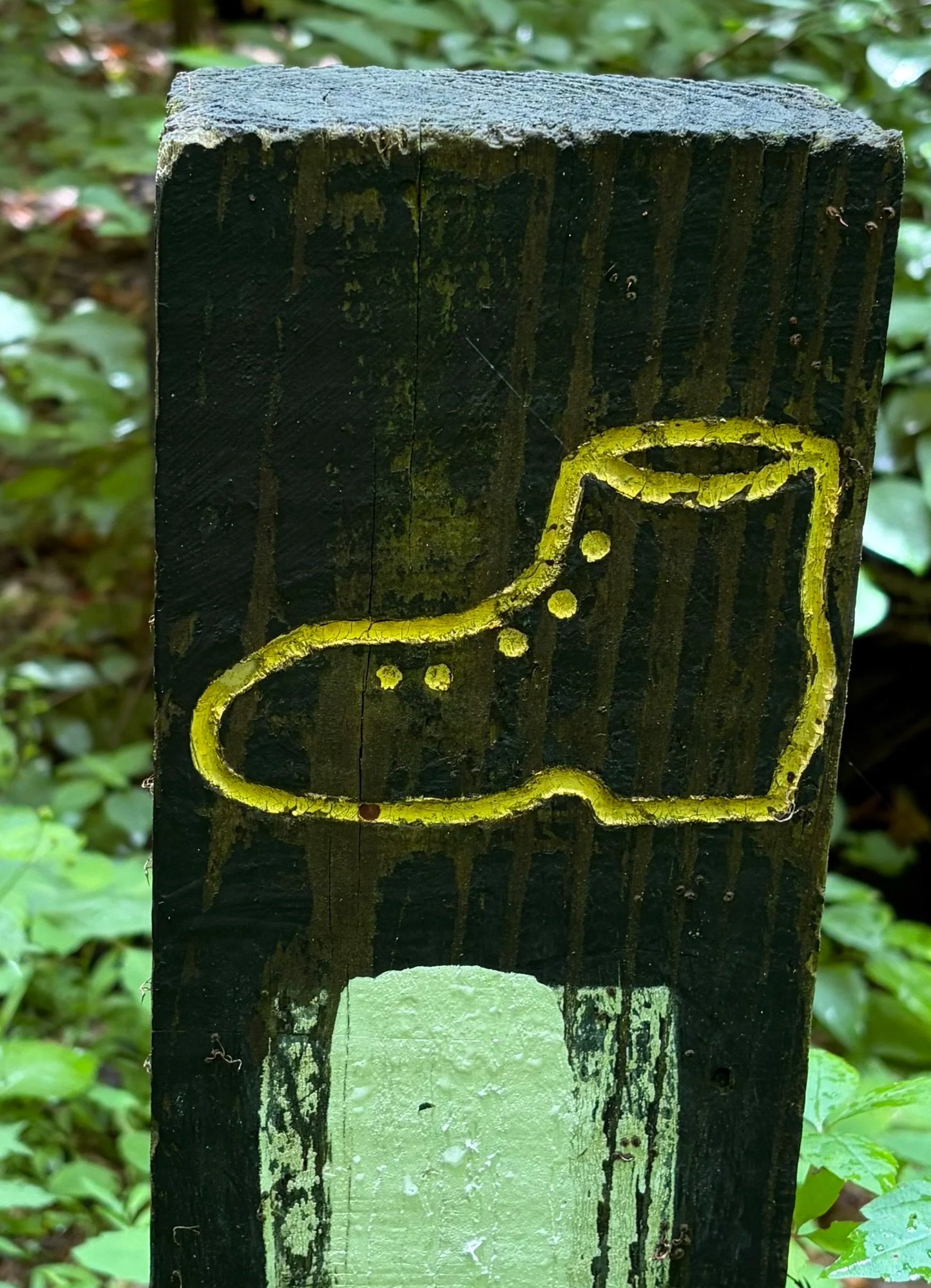
I recently (accidently) solo hiked 10 miles in a local state forest. I don’t tell you this to be braggadocious (what a seriously great word), but to tell you that I was afraid. I was afraid when I left the house and I was afraid, at times while walking. What if I twist my ankle? What if I encounter a nefarious person? What if I’m bitten by a venomous snake? What if…[insert your specific fear here]? If we’ve worked together then we may have talked about decision-making and evaluating potential risks and benefits of choices, as well as differentiating between feelings of discomfort versus intolerance. I thought a lot about these ideas on my hike (walking is bilateral stimulation and is great for thinking!) and thought it might be helpful to share these thoughts with you.
Merriam-Webster defines intolerance as “unable or unwilling to endure.” From a therapeutic standpoint, I see intolerance as pushing the nervous system to the point that we shut down and fully dissociate or experience a panic attack. We lose control of our body and our minds. We are essentially no longer physically and/or mentally functional. On the other hand, discomfort is defined as “mental or physical uneasiness.” In this space there is opportunity for growth. Does it feel great? Often not and yet it is still tolerable. “Our bodies benefit from a little hardship…when we’re under certain amounts of physiological stress…new pathways open, improving our health, honing our brains” (Windswept, by Annabell Abbs-Streets).
One issue with evaluating risk and benefit is that the risk is often tangible, while the benefit may show up in more subtle ways. For instance, I mentioned some of the risks of hiking alone above. These are ways in which my physical body could be damaged. On the other hand, the benefits are often mental/emotional. There is plenty of research about the psychological/emotional benefits of being in nature. I will also argue the ways in which hiking alone moves us along the path of self-actualization*, a life-long process toward reaching our full potential or becoming our most authentic and capable self. When hiking alone, there is no one to hold out their hand when you’re going up or down a steep creek bank, no one to help navigate a downed tree blocking the trail, no one to determine whether to go right or left when you come to a Y. It’s all on you. You must make the decision or take the step, and live with the consequences (thus the “accidental” part of the length of this hike because I totally made a wrong turn).
The author of The Anxious Generation,** Jonathan Haidt argues that because we lessened the risks of children (and added the use of smartphones), we now have generations of children experiencing anxiety and other mental health challenges. He tells the stories of several young boys who went missing in the late 1970s and early 1980s. Up until this point in time, children were largely free range with parents sending them outside to roam and play in groups. Gaining skills in leadership, teamwork, self-confidence, and so on. Even though, statistically speaking nothing had changed in terms of the numbers of missing children each year, these stories became newsworthy and parents became afraid. Going forward, many children were kept indoors or in gated yards. Parents kept a close eye on the whereabouts of their children and felt fearful when their children disappeared for even minutes. This is something many of us have experienced when our children played in department stores, hiding amongst the clothing racks. And so, all of those skills mentioned above (i.e., benefits) were never gained.
This brings us to the point of this post. When you are making a decision and doing your risk/benefit analysis, make sure that the risk is not overstated or overthought. As Simone de Beauvoie said “I had no intention of making my life a bore with precautions…” Make efforts toward making a full inventory on the potential benefits, including the subtler, psychological benefits. Notice whether the choices feel uncomfortable or intolerable. Consider how the decision moves you closer to or further away from your movement toward self-actualization.
Of course this does not have to be a solo hike. This was just one, recent experience of my own that really brought these ideas to light. In your life, you might be facing decisions about moving to a new home or even community. Quitting a job that is no longer fulfilling. Ending or entering into a new romantic relationship. Asking a potential new friend for coffee. Taking a class to learn something new and meet new people. Ask yourself, am I afraid to do this thing? What’s the actual risk? And how great could it be?
Next on my path toward self-actualization is solo camping. Doing what I can to mitigate risk (staying safe) while enjoying some time to myself, in nature, with a book, and a wee bit of self-reliance.
What’s next on your path?
Resources
*More on self-actualization: Could the Blackfoot Wisdom that Inspired Maslow Guide Us Now?
**More on The Anxious Generation: https://www.anxiousgeneration.com/